
Picture this: it's 7 a.m. in January, a nor'easter rolled through overnight, and your friends with houses are out there in their pyjama pants, shovelling the driveway for the third time this week.
And you? You're sipping your coffee, looking out your condo window at the harbour (or Bedford Basin, or the Dartmouth waterfront), and the walkway downstairs is already clear.
This is the condo dream, and in a Halifax winter, it's very real.
But here's the thing many condo owners only learn after their first winter: "someone else handles it" doesn't cover everything. There's a short list of winter jobs that are still yours. Miss them, and you could end up with a leak, a big insurance bill, or a very awkward conversation with your downstairs neighbour.
The good news? Your list is much shorter than a house owner's, and most of it takes minutes, not weekends. This Halifax condo winter checklist covers exactly what's on your plate, what's on your building's, and a few things nobody tells you until it's too late. Let's get your unit winter-ready.
(Own a house instead? Our sister blog has a Halifax winter home maintenance checklist made just for you.)

Condo Winter Maintenance: What's Yours and What's the Building's?
Every condo building in Halifax runs on its own set of rules, called the declaration and bylaws. They spell out which parts of the building belong to everyone (the "common elements") and which parts are yours alone. (New to condo lingo? Our Condo Glossary breaks it all down.)
That sounds dry, but it matters a lot in winter. It decides who pays when something freezes, leaks, or breaks. Here's how it usually breaks down:
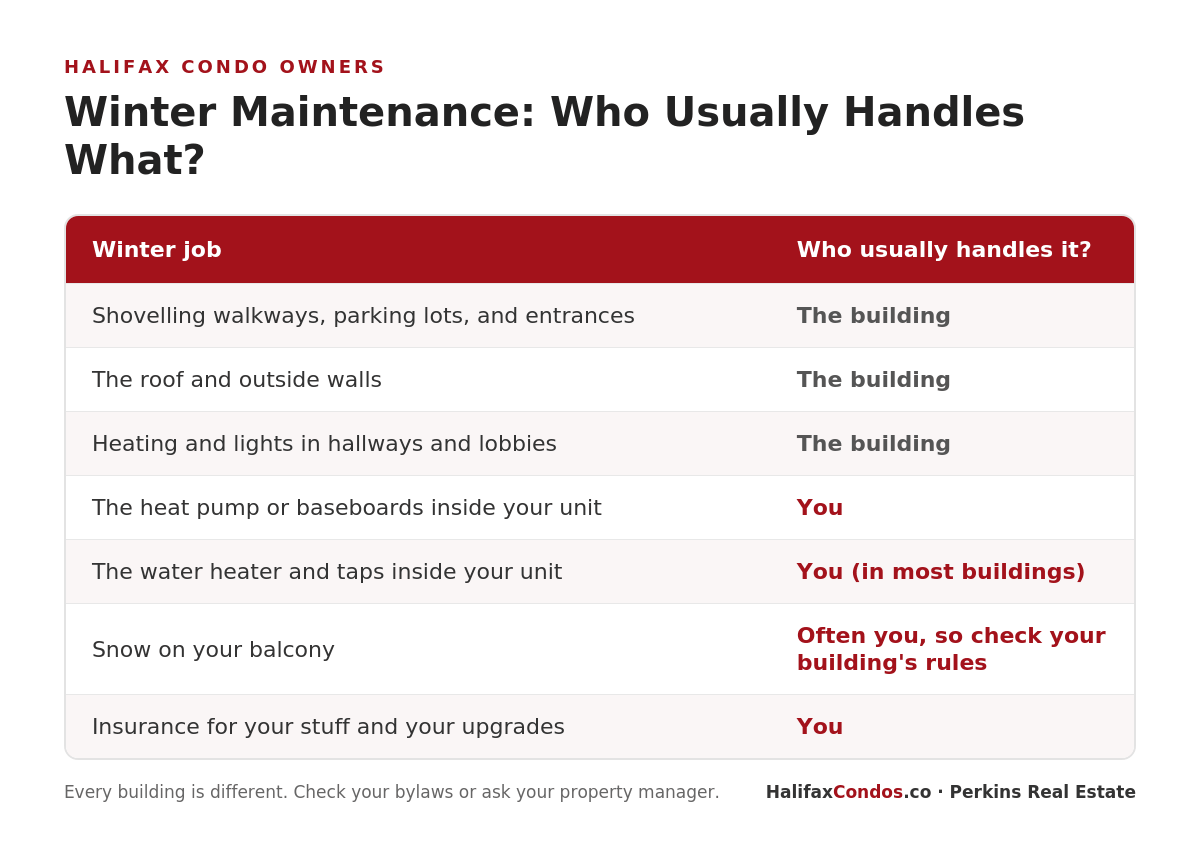
Quick tip: If you've never read your bylaws, winter is a great time to grab a coffee and skim them. Can't find your copy? Your property manager can send one. Five minutes now can save you a lot of guessing later.
Inside Your Condo Unit: Heat, Leaks, and Window Condensation
This is where most condo winter headaches start. The good news is that everything here is quick and cheap to fix.
1. Keep Your Heat Happy
Heat pump? Pop out the indoor filters and give them a rinse. Many brands suggest doing this monthly in winter. Clean filters mean more heat and lower power bills.
Baseboard heaters? Turn each one on before the first cold snap so you're not surprised. Keep couches, curtains, and boxes at least a few inches away. Blocking them wastes heat and can be a fire risk.
Never go below the minimum. Many buildings require you to keep your unit at a minimum temperature all winter, even when you're away. A cold unit can freeze pipes that run through your walls to your neighbours.
2. Stop Leaks Before They Start
In a condo, a small leak doesn't stay small. Water travels down, and suddenly it's in your neighbour's ceiling too. These quick checks protect you both:
Find your unit's water shut-off valve. Many condos have one inside the unit, often in a closet, under the kitchen sink, or near the water heater. If something bursts, you'll want to know where it is in seconds, not minutes.
Check your washing machine hoses. Old rubber hoses are a classic source of condo floods. Braided steel hoses cost very little and last much longer.
Look under your sinks and around the toilet for drips or water stains.
Know how old your water heater is if you have one in your unit. Older tanks are more likely to leak.
Grab a few water leak sensors. These little alarms sit on the floor near your washer, dishwasher, and water heater and beep (or ping your phone) the moment they get wet. They're cheap and very worth it.
3. Keep an Eye on Your Windows
A little fog on the inside of your windows on a frosty morning is normal. But if water is pooling on the sills every day, or you spot black spots in the corners, that's too much moisture.
Run your bathroom fan during and after showers, and your range hood when you cook.
Open your blinds or curtains during the day so air can reach the glass.
Wipe up pooled water so it doesn't damage the sills.
If the problem keeps coming back, tell your property manager. It could be a window seal issue, which is often the building's job to fix.
Bonus: Test Your Alarms
Press the test button on your smoke alarm and carbon monoxide (CO) detector, and swap in fresh batteries. It takes two minutes.
Condo Balcony, Parking Garage, and Storage Locker Tips
These are the "in-between" spaces. In many buildings, they're shared property that only you get to use, which means the rules can be a little different.
Balcony
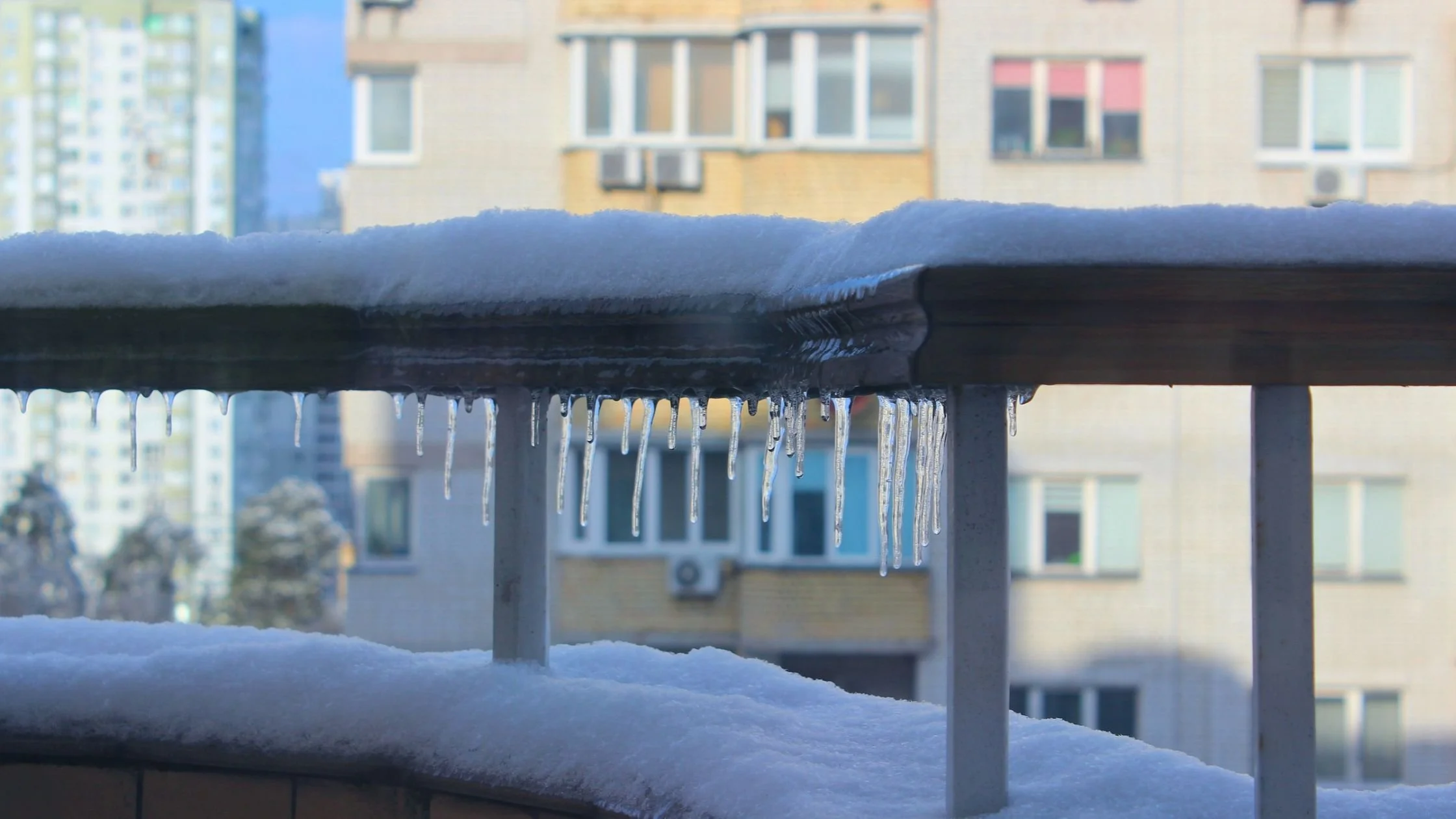
Check the de-icing rules. Many Halifax buildings don't allow rock salt on balconies because it can eat away at the concrete and the waterproofing underneath. Ask what's allowed (often sand or a concrete-safe product) before the first freezing rain.
Shovel gently, if at all. Some buildings want heavy snow cleared to protect the balcony. Others ask you not to shovel it over the edge (for obvious reasons, if you have neighbours below). Check your rules.
Bring in or tie down the furniture. Harbour winds can send a patio chair flying, and your downstairs neighbour will not thank you.
Store your BBQ properly. Many buildings have specific rules about BBQs and propane tanks on balconies, so a quick check is worth it.
Underground Parking
Your car brings winter inside with it. Salt and slush melt off and drip onto the parking garage floor, and salty water is hard on concrete.
Knock the snow off your car before you drive into the garage when you can.
Watch for building notices about garage cleaning days. If your car is in the way, it may get ticketed or moved.
Storage Locker
Check your locker for signs of moisture or leaks, and keep anything precious up off the floor in sealed plastic bins. If you see water, report it to management right away.
The Money Part: Condo Insurance Deductibles and Your Condo Fee
This is the least fun section, but it's the one that can save you the most money.
Make One Phone Call to Your Insurance Broker
Your building has its own insurance policy for the structure. But that policy has a deductible, and it's often thousands of dollars, sometimes much more.
Here's the catch: in many buildings, if a leak or other damage starts in your unit, the bylaws allow the condo corporation to pass that deductible on to you.
So call your broker and ask these three questions:
"If damage starts in my unit, am I covered for the building's deductible?"
"Are my upgrades covered?" (Think new flooring, a renovated kitchen, or anything that's nicer than when the unit was built.)
"Do I have enough liability coverage if water from my unit damages a neighbour's?"
It's a ten-minute call, and it could save you a five-figure surprise.
Why Winter Matters for Your Condo Fee
Remember: part of your condo fee pays for snow clearing, salt, heating the common areas, and saving up for future repairs (that's the reserve fund). A long, stormy winter costs your building more, and those costs can show up in next year's budget.
That's one more reason to take care of the small stuff in your own unit. Fewer leaks and insurance claims across the building help keep everyone's fees, and the building's insurance premiums, more stable.
Storms, Power Outages, and Neighbours in a Halifax Condo Building
One of the best parts of condo living is the built-in community. In winter, that community matters more than ever.
Save the Emergency Number Now
Find your property manager's after-hours emergency number and save it in your phone today. If water is coming through your ceiling at 2 a.m., you don't want to be digging through old emails to find it.
When the Power Goes Out in a Condo
Power outages are part of winter in Nova Scotia, and they work a little differently in a building:
Elevators stop. Know where your stairwells are, and keep a flashlight by the door (not just your phone).
Water pressure can drop on upper floors in some buildings that rely on electric pumps. Keeping a few jugs of drinking water on hand is a smart move.
Keep a small storm kit: flashlights, batteries, a power bank, easy food, water for a few days, any medications, and extra blankets.
Never use a BBQ, camp stove, or generator inside or on your balcony to stay warm or cook. The fumes can build up quickly and be deadly, and most buildings ban them anyway.
Be the Neighbour Everyone Loves
Report leaks right away, even small ones. In a building, fast action protects everyone.
Follow the boot rules. Some buildings ask you not to leave wet boots and mats in the hallway. Others provide boot trays. A quick check saves an awkward notice under your door.
Check on older neighbours after a big storm or long outage. A knock on the door goes a long way. It's the Nova Scotian way.
Halifax Extras: The Winter Parking Ban and Snowbird Season
Having Guests Over? Mind the Parking Ban
Your car may be tucked safely in the garage, but your visitors are probably parking on the street. HRM's overnight winter parking ban usually runs from mid-December to the end of March. When it's being enforced, cars left on the street overnight can be ticketed or towed.
Sign up for HRM's alerts and give holiday guests a heads-up, or check whether your building offers visitor parking.
Heading Somewhere Warm This Winter?
Lucky you! Condos are a favourite with snowbirds because you can lock the door and go. Just do these things first:
Leave the heat on at the minimum your building requires.
Turn off the water to your washing machine, or to the whole unit if your building allows it.
Tell your property manager how long you'll be gone, and leave a contact who can get into your unit in an emergency.
Call your insurance company. Many policies require someone to check on a vacant unit regularly in winter. Ask what yours needs.
Buying a Halifax Condo in Winter? Use the Weather to Your Advantage
Here's a little insider tip: winter is one of the best times to tour a Halifax condo. Summer showings look great, but winter shows you how a building really runs.
Whether you're touring downtown Halifax, the North End, Dartmouth, or Bedford, look for:
How the snow is handled. Are the walkways, entrance, and parking clear and salted? That tells you a lot about the property management.
Window condensation. Heavy moisture or stains on the sills can point to ventilation or window seal issues.
How warm the unit and hallways feel. Cold spots or drafty windows can mean higher power bills.
The parking garage. Look for big puddles, crumbling concrete, or lots of rust stains. Garage repairs can be very expensive.
Signs of past leaks. Water stains on ceilings, especially near windows, balconies, and the top floor.
Then back it up with the paperwork. The building's reserve fund study, budget, and meeting minutes will tell you whether big repairs are coming and whether the building is saving enough to pay for them. Our guide on how to read a condo's reserve fund study and our Condo Buyer's Guide walk you through it.
Your Printable Halifax Condo Winter Checklist
Screenshot this and tick things off as you go. Most of it takes less time than a Tim's run.
This month
☐ Clean heat pump filters and test your baseboards
☐ Find your unit's water shut-off valve
☐ Check washing machine hoses and under the sinks
☐ Put leak sensors near the washer, dishwasher, and water heater
☐ Read your building's balcony and de-icing rules
☐ Call your insurance broker about the building's deductible
☐ Save your property manager's after-hours emergency number
Before the first big storm
☐ Bring in or secure balcony furniture
☐ Test smoke and CO alarms
☐ Pack a small storm kit with a flashlight and drinking water
☐ Sign up for HRM parking ban alerts (for your guests)
All winter long
☐ Keep your heat at or above your building's minimum
☐ Clean heat pump filters monthly
☐ Watch for pooling water on window sills
☐ Report leaks to management right away
Halifax Condo Winter FAQ
Who clears the snow at a Halifax condo?
In most buildings, the condo corporation clears walkways, parking lots, and entrances, and that cost is part of your condo fee. Snow on your own balcony is often your responsibility. Your building's bylaws have the final say.
Can I use salt on my condo balcony?
Often, no. Many buildings ban rock salt on balconies because it can damage the concrete and waterproofing. Ask your property manager what de-icing products are allowed.
Who pays if a pipe bursts in my condo?
It depends on where the damage starts and what your bylaws say. In many buildings, if the leak starts in your unit, you may be responsible for the building insurance deductible. Ask your broker whether your policy covers it.
Can I turn my heat off while I'm away for the winter?
No. Keep it at the minimum temperature your building requires. A cold unit can freeze pipes that serve your neighbours too, and many buildings require you to keep the heat on.
Is winter a good time to buy a condo in Halifax?
It can be. There's often less competition, and you get to see how the building handles snow, heat, and moisture in real conditions. Pair your tour with a close look at the reserve fund study and meeting minutes.
Less Shovelling, More Living
That's the beauty of condo life in Halifax: while everyone else is wrestling with snowblowers, your winter to-do list fits on one page. Spend an hour on it this month, and you can spend the rest of the season enjoying the view.
And if you're thinking about buying or selling a condo this winter, a well-cared-for unit stands out. Buyers notice clean filters, dry window sills, and an owner who knows where the shut-off valve is. (Planning to sell? Here's what it costs to sell a Halifax condo.)
Thinking about your next condo move, or curious what your unit is worth this winter? Reach out to the Perkins Real Estate team, or get a quick estimate with What's My Condo Worth? We know Halifax's buildings inside and out, and we're always happy to chat, with zero pressure. Or grab a hot chocolate and browse the latest Halifax condo listings to see what's out there.
Stay warm (and dry) out there, Halifax!
Author: Jordan Gunn
Real Estate Assistant
Perkins Real Estate
Keller Williams select Realty